
3 min read

Most asked questions about pooled client accounts

Most asked questions about pooled client accounts

From January 1st 2026, changes to the Danish Anti-Money Laundering Act will come into force, which will have significant implications for lawyers who use a pooled client account. Going forward, lawyers will be required to obtain identification details for all clients whose funds are held in a pooled client account and to share this information with the financial institution where the account is held.

We have gathered the questions we hear most often about this legislative change, along with clear answers to help you understand what you need to consider.

What is a pooled client account?

A pooled client account is a bank account used by lawyers to hold client funds on a temporary basis.

Funds from multiple matters or clients may be held together in the account, while ensuring that clients’ funds are kept separate from the lawyer’s own funds. These funds may include, for example, deposits, compensation payments or sale proceeds, which remain in the account before being transferred to the individual client.

What will change from January 1st 2026?

The legislative change means that lawyers will be required to collect and disclose identity information to banks regarding the beneficial owners of the funds held in the pooled client account.

This enables banks to meet their own obligations under anti-money laundering legislation without lawyers breaching their duty of confidentiality. As a lawyer, you will now have a clear statutory basis for sharing this information.

Why are the rules being changed?

Banks and lawyers have found themselves caught in a conflict between banks’ obligation to carry out customer due diligence under anti-money laundering rules and lawyers’ duty of confidentiality towards their clients.

Banks are required to know who ultimately owns the funds in an account in order to monitor and control transactions, while lawyers are generally prohibited from disclosing client information.

This has created a “gap” in banks’ anti-money laundering controls, which the legislative change is intended to address. The aim is to increase transparency without weakening the lawyer’s role as a trusted adviser.

Does this mean I breach my duty of confidentiality when I share information with the bank?

No.

The new section 38b of the Anti-Money Laundering Act provides an explicit legal basis for sharing the necessary information with the bank. This means that your duty of confidentiality remains intact, but the law now clarifies what you are permitted – and required – to disclose in this context. You must still ensure that only information necessary for the bank’s customer due diligence is shared.

What information am I required to share with the bank?

You must be able to provide the bank with information that allows it to identify the beneficial owners of the funds held in the pooled client account. The required information includes:

  • For natural persons: full name and CPR number (or date of birth for individuals without a CPR number)

  • For legal persons: name and CVR number (or equivalent registration number)

The purpose is to enable the bank to comply with customer due diligence requirements.

When does the information have to be shared?

The information must be obtained in connection with a transaction on the pooled client account and must be shared as soon as the funds are received in the account, unless otherwise agreed in writing with the financial institution.

In practice, it is expected that banks and lawyers will agree on a specific procedure, for example when a client account is opened, in connection with larger transactions, or upon request.

What about my existing pooled client accounts?

The new rules apply from January 1st 2026 – and applies to existing accounts as well. This means that you should:

  • Review your current pooled client accounts

  • Obtain any missing identification information

  • Prepare to share the information with your financial institution

The sooner you get this in place, the smoother the transition will be.

What happens if I cannot obtain the information?

If you are unable to identify the beneficial owners of the funds, this will generally mean that the funds may not be received into the pooled client account. You also risk breaching both the Anti-Money Laundering Act and your professional obligations as a lawyer.

This underlines the importance of having a robust KYC setup and documentation that can be provided upon request.

How can I best prepare for the change?

Here are three simple steps:

  • Gain an overview of your accounts, clients and financial institutions

  • Update your processes to ensure that required client information is collected and stored systematically

  • Engage in dialogue with your bank to clarify how and when information should be shared

A digital tool can help you keep everything in one place – reducing manual paperwork and uncertainty.

How can Creditro help?

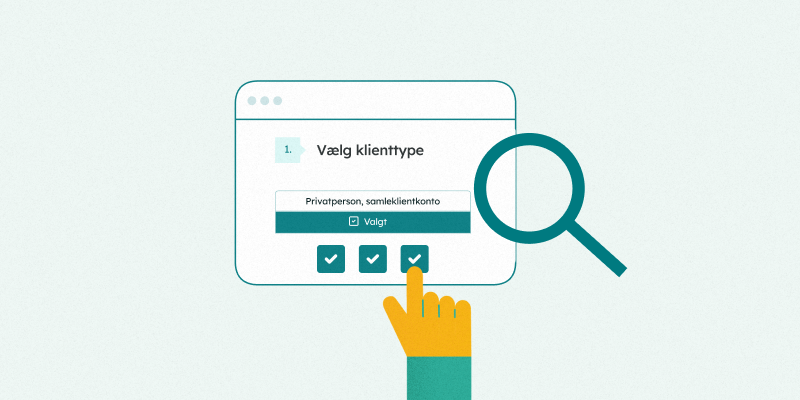
At Creditro, we make compliance easier to manage. We have developed Creditro Comply Light to address the specific need that arises with the legal change. This platform gives you only what you need, without a lot of complex settings. Comply Light helps you create clients, collect ID, and store documentation securely in minutes.

This process allows you to focus on the legal work – while we help with the documentation.

If you would like to learn more about how Comply Light can help you oblige with the updated pooled client accounts legislation, you can read more about the platform and reach out to us for a demo.

What is KYC?

6 min read

What is KYC?

KYC (Know Your Customer) is a legally required process through which businesses identify, verify and assess the risk of their customers in order to...

Læs Artiklen
How to choose the right KYC solution for your business

8 min read

How to choose the right KYC solution for your business

If you are an AML officer, compliance manager or decision-maker in a business subject to the Danish Anti-Money Laundering Act, this article is for...

Læs Artiklen
The gut feeling: an important tool in compliance

3 min read

The gut feeling: an important tool in compliance

Most people working with AML compliance will recognise the feeling when your gut feeling just doesn’t sit right.

Læs Artiklen